Choosing the right floor lamp can transform a reading corner from tiring to comfortable. This guide explains how to position a floor lamp for reading without creating harsh glare, dark pages, or distracting shadows. The goal is simple: clear light that supports your eyes and fits the room.
Lighting designer Richard Kelly, a pioneer of architectural lighting, said, “Light is the key to human existence.” His principle applies to reading lamps too. A useful floor lamp should illuminate the page while remaining outside your direct line of sight. Place it beside your reading chair, slightly behind your shoulder. For right-handed readers, the lamp often works best on the left side. This reduces shadows from your writing hand. Left-handed readers may prefer the opposite position.
Keep the shade near head height, but do not let the bulb shine into your eyes. A flexible reading lamp should aim downward toward the book, usually at a gentle angle. Test the position while sitting naturally. Do not judge it while standing. The light may look perfect from across the room, yet feel uncomfortable after twenty minutes.
A warm-white LED around 2700K to 3000K often creates a calm reading atmosphere. Choose enough brightness for small print, but avoid excessive intensity. A dimmer helps when daylight changes. Still, positioning matters more than buying the most powerful lamp. I once assumed brighter light solved every problem. It did not. Reflected glare from glossy pages remained. This guide considers chair height, book position, shade design, and room surfaces, helping you create a practical setup that feels comfortable in real use.
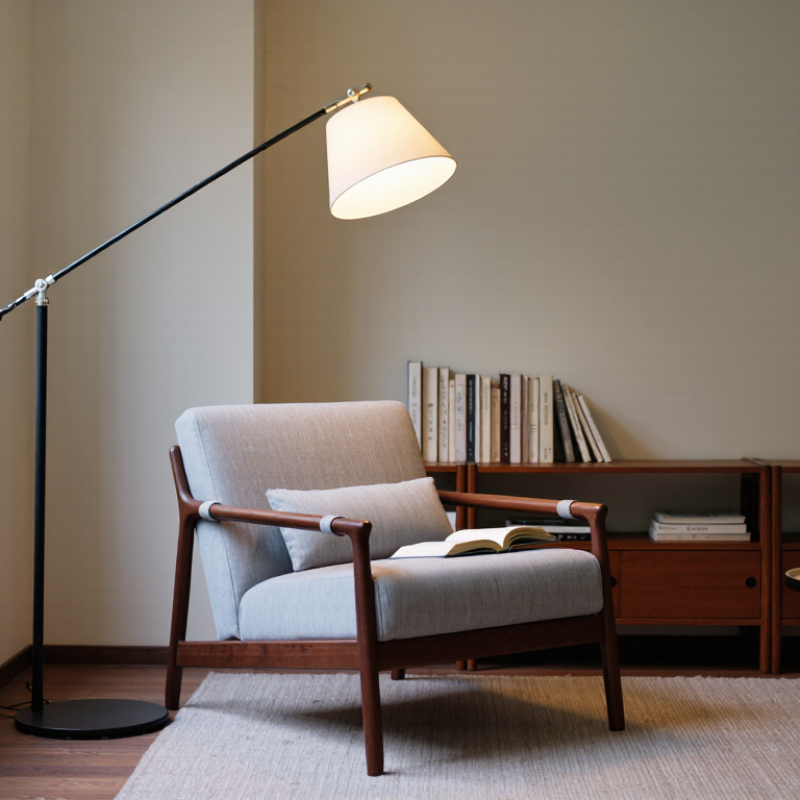
Choosing the Best China Floor Lamp for Reading
A quality China floor lamp should provide stable light, safe wiring, and easy adjustment. Do not judge quality by appearance alone. Check the product’s electrical certification, diffuser, base weight, and heat control. The IES Lighting Handbook places many reading tasks around 300–500 lux. EN 12464-1:2021 commonly specifies 500 lux for reading and writing areas. A dimmable lamp is more practical than an extremely bright one.
Place the lamp beside your chair, slightly behind your shoulder. Right-handed readers usually need light from the left. Left-handed readers may prefer the opposite side. Keep the shade below eye level, with the beam aimed at the page. A flexible arm helps maintain this angle. Use a 3000–4000K color temperature and a color rendering index of 90 or higher. The page should look clear, not blue or gray.
My own mistake was choosing a tall lamp with a beautiful exposed bulb. It created glare after twenty minutes. I still adjust my lamp during evening reading. A wide, weighted base prevents movement on carpets, while a quiet dimmer supports changing eyesight and room brightness. The U.S. Department of Energy’s solid-state lighting guidance also highlights efficiency, thermal management, and long service life as key performance factors. Check real light distribution, not only lumen claims.
Before choosing a floor lamp for reading, measure the reading area instead of guessing. Mark the chair, side table, and the space where your feet rest. A typical reading corner may need about 90 centimeters of clear width. Leave enough room to walk past it safely.
Sit in your usual reading position and measure from the floor to your shoulder. The lampshade should sit slightly above eye level, reducing direct glare. For a chair beside a table, place the lamp roughly 30 to 45 centimeters away. Check whether the base blocks the table, footrest, or nearby doorway. Small details matter.
I usually test the position with a temporary lamp or cardboard marker first. It saves effort. The reading beam should fall across the page, not directly into your eyes. Right-handed readers may prefer light from the left side, while left-handed readers often prefer the opposite. However, room layout can change that choice. I once placed a lamp correctly by measurement, yet the wall reflected harsh light at night. A softer shade would have helped. Measure again after adding curtains, rugs, or furniture, because these changes can make the available space feel smaller. Keep the cord close to the wall and away from walking paths. Leave room to adjust the lamp later. Perfect placement may need a second attempt.
Measuring the reading area and available space before placing a floor lamp
A comfortable reading setup typically needs about 90–120 cm of width and 90–120 cm of depth around the chair or sofa. The lamp should stand beside the reading seat without obstructing circulation, while keeping approximately 30–45 cm between the lamp base and the seat edge for focused illumination and safe movement.
A China best floor lamp for reading should create balanced, glare-free light rather than simply look bright. Place it slightly behind your reading shoulder, about 30–45 centimeters from the chair. This position spreads light across the page without shining directly into your eyes. Keep the shade below eye level when seated. You should see the page, not the bulb.
Test the lamp after sunset. Open a book and check both pages for dark corners. A warm-neutral light around 3000–4000K often feels comfortable for longer reading sessions. A diffused shade can soften harsh reflections from glossy paper, glass tables, or polished floors. Adjust the arm or head until the brightest spot rests near the center of the book. Small changes matter.
My first setup was too close to the chair. The left page looked clear, but my hand cast a heavy shadow. Moving the lamp outward solved part of the problem, though the corner became slightly dim. That reminded me that “glare-free” does not mean weak lighting. It means controlled lighting. If the room remains dark, add gentle ambient light behind or beside the chair. Avoid placing the lamp directly behind your head, where your body can block the beam. Check the arrangement from your normal reading posture, not while standing.
A floor lamp for reading should light the page, not your eyes. The Illuminating Engineering Society commonly recommends 300–500 lux for reading tasks, depending on print size and the reader’s age. Place the lamp beside your chair, slightly behind your shoulder. This position reduces direct glare on the page.
Height matters. Set the shade near eye level when you sit upright, then lower it slightly if the bulb remains visible. The light should reach the book from above and from the opposite side of your writing hand. A height-adjustable lamp is useful here. My own setup needed more adjustment than expected.
Angle changes comfort quickly. Aim the beam toward the center of the page, not your face. Keep the lamp about 40–60 centimeters from the chair, then check whether the page has bright patches.
The CIE’s guidance on glare emphasizes controlling excessive contrast and uncomfortable brightness. A frosted diffuser can soften sharp reflections, but it may reduce useful light.
Reading distance also depends on the chair. If you recline, move the lamp backward and tilt it downward. If you lean forward, bring it closer. Small changes work better than dramatic movements. Keep cables away from your feet.
I sometimes place the lamp too far back, creating a dim lower corner. That mistake is easy to miss. A light meter can verify the result; 300 lux is only a starting point, not a guarantee of comfort.
Position a floor lamp slightly behind your shoulder, about 30–45 centimeters from the chair. Keep the shade below eye level. This reduces direct glare while keeping the page bright. The IES Lighting Handbook commonly recommends 300–500 lux for reading and similar visual tasks. Use a light meter app only as a rough guide. Phone sensors can be inaccurate.
Comfort depends on more than brightness. The light should reach the page without creating a hard shadow from your head or hand. A 2700–4000K setting often feels suitable for evening reading, while a color rendering index of 80 or higher helps printed colors appear more naturally. The U.S. Department of Energy notes that LED performance varies by product, so advertised brightness should not be accepted blindly. Check the actual lumen output and dimming behavior. Too bright is tiring.
Stability deserves a physical test. Place the lamp on level flooring, extend the arm fully, and gently tap the stand from several directions. It should not wobble or creep. Keep the base clear of foot traffic and cable loops. Keep it steady. A broad, weighted base usually feels safer, but “heavy” does not always mean stable. My own positioning check is not laboratory-grade. Still, I read two pages, adjust the shade, and check for eye strain after ten minutes. Small changes matter. The CIE report on visual comfort also emphasizes controlling glare, not merely increasing illumination.
| Positioning Factor | Recommended Target | Why It Matters for Reading | Practical Check |
|---|---|---|---|
| Lamp-to-book distance | Approximately 35–60 cm | Keeps the reading area bright without creating an excessively concentrated hotspot. | Move the lamp closer if the page looks dim; move it farther away if the light appears harsh or uneven. |
| Lamp height | Shade or light source slightly above eye level when seated | Reduces direct glare while allowing light to reach the page. | Sit in the normal reading position and confirm that the bright light source is not visible directly in your eyes. |
| Side placement | Place beside the dominant hand or on the opposite side if writing | Helps limit shadows cast by the head, hand, or book. | For right-handed readers, test the lamp on the left when writing; for left-handed readers, test the right side. |
| Reading illuminance | About 300–500 lux on the page | This range is commonly used as a practical target for comfortable reading and detailed near-work. | Use a light meter app or handheld lux meter at page level, recognizing that phone readings are approximate. |
| Light color | Approximately 3,000–4,000 K | Warm-to-neutral white light can support comfortable reading without appearing overly yellow or overly stark. | Choose a warmer setting for relaxed evening reading and a neutral setting for sharper page contrast. |
| Glare and reflections | Keep the beam angled toward the page, not toward the eyes or glossy cover | Controls reflected glare that can reduce contrast and cause eye discomfort. | Tilt or rotate the shade until the page remains clear when viewed from the usual seating position. |
| Base stability | Base fully flat, centered, and positioned away from walkways | Reduces the chance of wobbling or accidental contact while sitting down or standing up. | Gently tap the pole and base; the lamp should settle quickly without rocking or sliding. |
| Cord routing | Run the cord along a wall or behind furniture | Prevents the cable from becoming a trip hazard and keeps the reading area tidy. | Ensure the cord is not stretched tightly, pinched, or placed beneath a chair leg. |
| Ambient room lighting | Use soft background light instead of a completely dark room | A moderate surrounding brightness can reduce the visual contrast between the page and the room. | Turn on a dim ceiling light or nearby wall light if the room feels completely dark around the reading chair. |
| Comfort after extended use | No squinting, eye strain, or repeated repositioning | Comfort depends on both adequate illumination and controlled glare. | Read for 20–30 minutes and adjust brightness, angle, or distance if discomfort develops. |
Aim for about 300–500 lux on the pages. Extremely bright light is not always better.
Place it 30–45 centimeters from the chair, slightly behind your reading shoulder. Keep the shade below eye level.
Right-handed readers usually prefer light from the left. Left-handed readers may prefer the opposite side.
Choose warm-neutral light between 3000K and 4000K. The page should look clear, not blue or gray.
It helps aim the beam at the book’s center. Small adjustments can reduce shadows and glare.
Test the lamp after sunset with an open book. You should see the pages, not the bulb.
Choose a wide, weighted base that stays steady on carpets. A moving lamp can interrupt reading and create poor angles.
Yes, dimming helps when eyesight and room brightness change. Quiet controls are better during evening reading.
A lamp placed too close may let your hand cast a heavy shadow. Moving it outward can help, though one corner may become dim.
Check electrical certification, diffuser quality, heat control, wiring, and real light distribution. Attractive designs can still create glare.
Choosing the best China floor lamp for reading begins with matching its design, brightness, and flexibility to your reading habits and room layout. Before placing it, measure the reading area and available space around the chair, side table, and nearby furniture. This helps ensure that the lamp provides useful light without creating obstacles or making the area feel crowded.
To understand how to position a floor lamp for reading, place it beside or slightly behind the chair so the light falls evenly across the pages without shining directly into your eyes. Adjust the lamp’s height, angle, and distance to reduce glare and shadows, especially when changing between books, tablets, or magazines. Finally, check that the base is stable, the lamp is easy to reach, and the light makes the text clear and comfortable to read. A well-positioned lamp should support relaxed reading while maintaining balanced illumination throughout the space.
