Choosing the right light for a desk can seem simple, yet small differences affect comfort, focus, and daily productivity. A warm lamp may make a study corner feel inviting, while a poorly positioned light can create glare across your notebook or screen. The key is understanding how each fixture delivers light, where it places that light, and how often you need to adjust it.
Many readers ask, “what is the difference between a desk lamp and a task light?” A desk lamp usually provides general illumination for a workstation. It may include a decorative shade, a compact base, and adjustable brightness. A task light is more purpose-driven. It directs stronger, focused light toward activities such as drafting, reading, sewing, or detailed computer work. The distinction is useful, but it is not absolute. Some modern desk lamps are excellent task lights, and some task lights look surprisingly decorative.
In practical use, placement often matters more than the label. A right-handed writer may need the lamp on the left side, reducing shadows across the page. A diffuser can soften harsh reflections, while a color rendering index above 80 usually supports more natural-looking colors. For detailed work, adjustable color temperature and a stable arm can make long sessions easier. However, brighter is not always better. Excessive intensity may cause eye strain, especially in a dark room. This guide compares both options through real workspace needs, comfort, adjustability, and visual performance, while recognizing that personal preference still matters. (223 words)
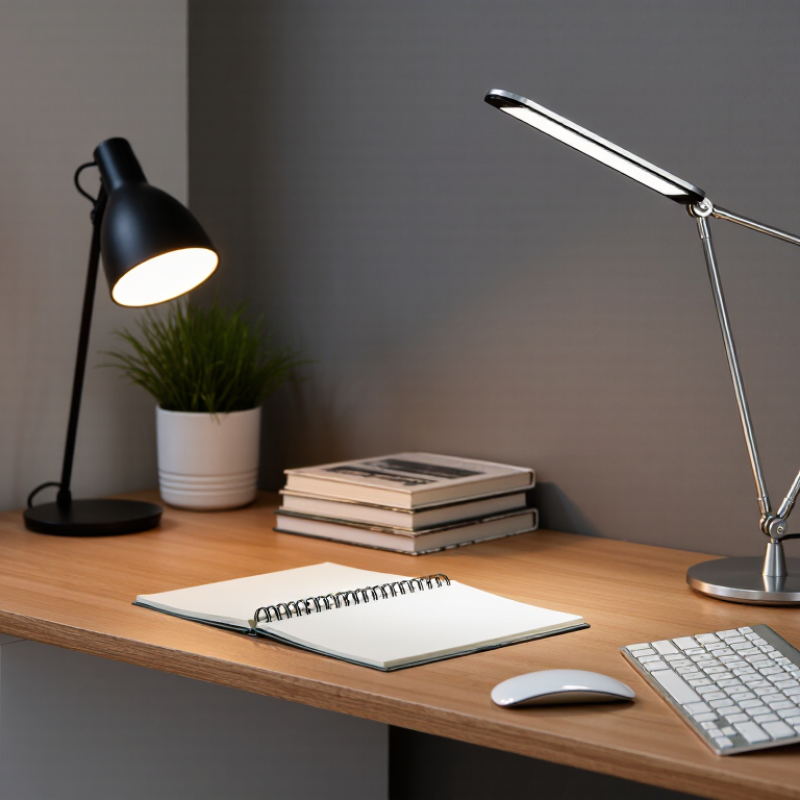
Define Desk Lamps and Task Lights by EN 12464-1’s 500-Lux Office Standard
How to Choose Between a Desk Lamp and a Task Light?
EN 12464-1 commonly uses 500 lux as the maintained illuminance target for office reading, writing, and computer work. Lux measures light reaching the work surface, not the lamp’s advertised brightness. A desk lamp usually provides flexible, local illumination beside your computer or notebook. A task light is more specific. It directs light toward a working area, reducing shadows around documents, tools, or detailed projects. In practice, one lamp can serve both roles.
The 500-lux figure should guide your decision, not dictate it blindly. Measure the desk surface where your hands and documents rest. Include light from the ceiling, windows, and lamp together. A focused light may create bright paper but leave the keyboard dim. A broad shade can feel comfortable, yet it may cause reflections on a monitor. The standard also considers glare, uniformity, and color rendering, so brightness alone is incomplete evidence.
Tips: Choose adjustable height and angle for changing tasks. Aim the light across the page, not directly into your eyes. Keep it away from the screen’s reflection path. Test the setup in daytime and evening conditions. If possible, use a lux meter at several desk points. My own first setup looked bright but measured unevenly, which was a useful mistake. Also check the current edition and local adoption of EN 12464-1 before treating 500 lux as a strict compliance requirement.
How to Choose Between a Desk Lamp and a Task Light?
Office lighting levels based on EN 12464-1's 500-lux standard
Desk Lamp
A desk lamp provides localized illumination for a workstation. It is useful when the surrounding office already provides general lighting but the work surface needs additional light.
Task Light
A task light is selected for a specific visual activity, such as reading, writing, or detailed document work. Aim for about 500 lux on the task area for typical office work.
How to Decide
Choose a task light when the desk surface is below the required level or when contrast and detail are demanding. Choose a desk lamp for flexible, personal control without changing the whole room.
Measure Workspace Coverage Against the IES Recommended 300–500 Lux Range
How to Choose Between a Desk Lamp and a Task Light?
A desk lamp and a task light solve different coverage problems. The useful choice starts with the work surface, not the fixture’s appearance. IES guidance commonly places detailed desk work around 300–500 lux. Measure where your hands, keyboard, and notebook actually sit. A desk lamp often spreads softer light across a broader area. It suits reading, writing, and mixed computer work. A task light usually aims a narrower, stronger beam. It works well for drawing, sewing, repairs, or close inspection.
In my workspace, I used a handheld lux meter and marked a simple grid. I checked the center, corners, and the area beside my keyboard. The desk lamp reached 360 lux in the center but dropped below 250 near the edge. The task light reached 520 lux directly below it, then fell sharply. That result looked efficient, but the contrast made my eyes tire sooner. I moved the light, lowered its angle, and retested. The coverage improved, though one corner remained dim. Not perfect.
If most readings stay within 300–500 lux, choose based on coverage and glare. For a wide desk, favor an adjustable desk lamp or combine gentle room lighting. For precision work, choose a task light with a stable arm and controlled beam. Keep the brightest spot away from your direct sight line. Measure again at night. Daylight can disguise weak coverage. A phone sensor can provide a rough clue, but a calibrated meter is more dependable. Check reflections on glossy paper and screens, because lux alone misses visual comfort.
Compare Glare Control Using EN 12464-1’s UGR 19 Limit for Offices
A desk lamp and a task light can look similar, but their glare performance may differ greatly. EN 12464-1:2021 recommends 500 lux and a Unified Glare Rating (UGR) limit of 19 for office reading, writing, typing, and data processing areas. Lower UGR means less discomfort glare. CIE 117:1995 provides the calculation method behind this rating.
A task light usually offers controlled optics, shielding, and adjustable positioning. A basic desk lamp may send bright light directly toward the eyes or glossy screens. I have noticed this during late computer work: the paper looked bright, but the monitor showed a distracting white reflection. UGR is not determined by the lamp alone. Ceiling reflectance, wall colors, viewing direction, mounting height, and spacing also affect the result. A product claiming UGR 19 may rely on specific room conditions. That detail is easy to miss.
Tips: Place the light beside your writing hand, not behind the screen. Keep the luminous opening outside your direct line of sight. Test the lamp at your normal sitting position for fifteen minutes. Check both paper and screen surfaces. A simple phone photo can reveal reflections, although it is not a certified measurement. For reliable verification, request photometric data and confirm the stated UGR assumptions. My own checks are useful, but imperfect. A proper assessment still needs measured illuminance and professional glare calculations.
Evaluate Color Quality with the Professional CRI 80+ Benchmark
How to Choose Between a Desk Lamp and a Task Light?
Evaluate Color Quality with the Professional CRI 80+ Benchmark
When choosing a desk lamp or task light, check its Color Rendering Index, or CRI. A CRI rating of 80 or higher is a practical professional benchmark for everyday reading, writing, and computer work. It helps printed pages, skin tones, and colored charts appear closer to their natural appearance. I have found that a lamp with CRI 80+ makes small color differences easier to notice during long editing sessions.
CRI is not the whole story. A light can meet 80+ and still make red objects look dull. Check the R9 value when your work involves artwork, makeup, food, or detailed design. A neutral color temperature around 3500K to 4000K often feels balanced at a desk. Warmer light may feel comfortable, but it can weaken visual contrast. Task lights usually offer better direction and control, while desk lamps may spread softer illumination across a wider area.
My first choice was wrong.
I once selected a bright lamp based only on lumens. The page looked clear, yet colored notes appeared strangely muted. That experience changed my buying checklist. I now inspect CRI data, beam direction, glare control, and adjustability together. If the specifications are vague, be cautious. Reliable lighting information should state the CRI rating clearly, not hide it behind decorative language. A good test is simple: place white paper, a red object, and a blue object beneath the light. Notice the differences before deciding.
Conclusion
Choosing the right lighting begins with understanding what is the difference between a desk lamp and a task light. A desk lamp is typically a compact, localized fixture designed to brighten a personal work area, while a task light is engineered for focused activities that require controlled, consistent illumination. Using EN 12464-1’s 500-lux office standard as a reference, assess whether the fixture can adequately cover your workspace. The IES recommended range of 300–500 lux can also help determine whether the light is comfortable and practical for reading, writing, or computer work.
Glare control is equally important, especially in offices where a UGR of 19 or lower is recommended. Look for shielding, diffusers, and adjustable positioning to reduce reflections and eye strain. For clear color perception, choose a light with a CRI of 80 or higher. Finally, consider the precision of your work, the fixture’s adjustability, and its energy consumption. A simple desk lamp may suit general use, while a flexible task light is better for detailed, long-duration activities.

