How to Tell If Grow Lights Are Too Close and Burn Leaves?

Time:2026-10-07 Author:Sophia
0%

Can grow lights burn plant leaves if too close? Yes, although “burn” often describes several different stresses. Excessive light can overload photosynthesis, while trapped heat can raise leaf temperature. The result may appear as pale patches, crisp brown edges, curled leaves, or bleached new growth.

Professional growers measure intensity with PPFD, not brightness alone. The U.S. Department of Energy’s horticultural-lighting research links LED performance to photon output, fixture distance, and thermal management. Meanwhile, university crop-lighting trials show that plants respond to daily light integral, or DLI, rather than lamp wattage alone. A powerful fixture can create harsh hotspots within minutes. Your hand may feel comfortable underneath, but a leaf can still receive excessive photons.

Dr. Bruce Bugbee, a leading plant physiologist and horticultural-lighting researcher, has explained: “Plants don’t care whether the light comes from the sun or from LEDs.” The important variable is the light reaching the leaf.

Watch the leaves, not only the lamp label. Bleaching on the upper canopy, dry tissue directly beneath the fixture, and unusually tight curling are practical warning signs. A 2024 report from the American Society for Horticultural Science also reinforces the value of controlled light intensity, temperature, and photoperiod in protected cropping. Still, no single distance suits every plant. That is where beginners, including me, can oversimplify the problem. PPFD, leaf temperature, airflow, plant age, and humidity must be considered together. Move the light higher, reduce intensity, and observe new growth for several days before changing anything again.
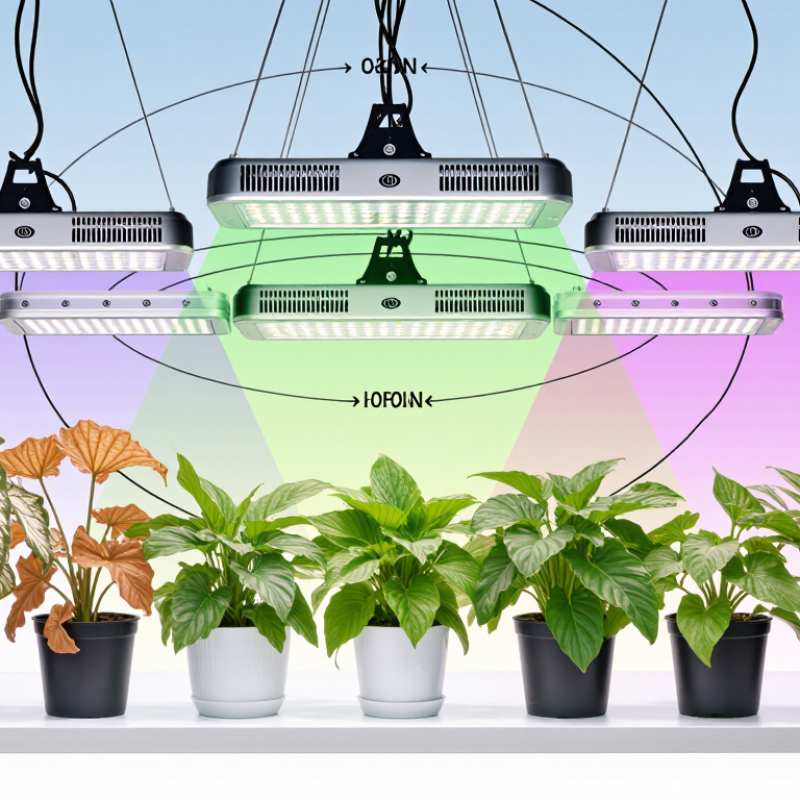
How to Tell If Grow Lights Are Too Close and Burn Leaves?

Recognizing Early Signs of Light Stress on Plant Leaves

When grow lights sit too close, leaves often reveal stress before the whole plant declines. New growth may look unusually pale, yellow-green, or almost white. This bleaching usually appears on the upper leaves facing the lamp. Lower leaves can remain dark green, creating a sharp contrast.

Watch the leaf shape, too. Light-stressed leaves may curl upward, fold like a taco, or develop dry brown edges. The surface can feel warmer than nearby leaves. Some damage looks crisp and sudden, while other symptoms develop over several days. I once blamed pale leaves on a nutrient problem, but the soil test showed no clear deficiency. Moving the lamp higher helped the newest leaves recover, although the damaged tissue stayed marked.

Check the plant at different times of day. A light can seem harmless in the morning but heat the canopy by afternoon. Use a thermometer near the top leaves, and compare it with the room temperature. Also inspect for pests, poor watering, and weak airflow, because these problems can mimic light stress. If symptoms appear, increase the distance gradually or lower the light intensity. Avoid making several changes at once; otherwise, you may not know what helped. New growth is the best evidence. Healthy leaves should expand with even color, firm texture, and no expanding scorched patches. Keep notes. Small details matter.

Checking Whether Grow Lights Are Positioned Too Close

Checking Whether Grow Lights Are Positioned Too Close

A close grow light does not always burn leaves immediately. I check the canopy before changing the hanging height. Bleached upper leaves, brown crispy edges, curled tips, and pale patches usually signal excessive light or heat. New growth matters most. Older damage will not recover, so it can mislead the diagnosis. I once blamed the lamp, but dry air and poor watering were also involved.

Use a PAR meter to measure PPFD at the tallest leaves, not just beneath the fixture. Compare readings across the canopy because bright hotspots often cause uneven damage. University of Minnesota Extension guidance places many leafy greens near 12–17 mol/m²/day of daily light integral, while fruiting crops may need about 22–30 mol/m²/day. These figures describe total daily light, not a universal hanging distance. Photoperiod changes the result.

Check leaf temperature with an infrared thermometer. Leaves several degrees warmer than surrounding air deserve attention. Raise the fixture gradually, often by 10–15 centimeters, then observe new growth for three days. Reduce intensity if the light allows it. Do not make several changes together. That makes the result difficult to judge. Ventilation, humidity, water stress, and reflective surfaces can intensify damage. A PPFD map from the light manufacturer is useful, but real canopies rarely match laboratory conditions. My measurements may still be imperfect. That is why repeated checks matter.

Distinguishing Light Burn From Heat, Water, and Nutrient Damage

How to Tell If Grow Lights Are Too Close and Burn Leaves?

Light burn often starts on the upper leaves nearest the fixture. The affected tissue may look pale, bleached, or yellow before becoming dry and brown. New growth can appear smaller or unusually tight. Heat damage looks similar, but leaves may curl upward, feel crisp, or show scorched edges. Check the canopy temperature with a small thermometer. If the air is hot, poor ventilation may be part of the problem.

Water and nutrient damage usually follow different patterns. Underwatering causes limp leaves and dry soil, while overwatering produces soft growth and yellowing from the lower leaves. Nutrient shortages often affect several leaves, with clear patterns between veins or along margins. Light burn usually targets the brightest area first. I have misread these signs before, especially when dry soil and intense light occurred together. Plants rarely follow perfect diagrams.

Tips: Raise the light slightly and observe new growth for several days. Do not judge recovery by damaged leaves; they will not become green again. Check soil moisture, airflow, and leaf temperature before changing fertilizer. If only the top leaves bleach, reduce light intensity gradually. If the whole plant wilts, inspect roots and watering habits. Record changes with simple notes. Guessing feels faster, but it often creates a second problem.

Adjusting Grow Light Height, Intensity, and Daily Exposure

How to Tell If Grow Lights Are Too Close and Burn Leaves?

Leaf bleaching, curled edges, and dry brown patches can signal excessive light. Heat may contribute, but light stress is not always the only cause. Low humidity, dry roots, or fertilizer buildup can create similar symptoms. I once lowered a lamp after seeing pale leaves, then discovered the real issue was poor watering.

Measure PPFD at the canopy instead of judging height alone. The inverse-square rule helps, but LED fixtures spread light unevenly. The ASABE EP406.4 lighting standard supports using PPFD for controlled-environment crop measurements. For many foliage plants, begin near 100–200 µmol/m²/s, then adjust slowly. Tender seedlings may need less. Keep the lamp higher when the top leaves feel warm or show bleaching.

Daily exposure matters as much as intensity. Calculate DLI with this formula:

PPFD × hours × 0.0036

A reading of 150 µmol/m²/s for 12 hours delivers about 6.5 mol/m²/day. Research published in Frontiers in Plant Science links plant responses to the combined effects of PPFD and photoperiod, not brightness alone. Increase exposure gradually, perhaps 10% every few days. The U.S. Department of Energy’s horticultural-lighting reports show modern fixtures commonly exceed 2.5 µmol/J, so efficient lamps can still overwhelm small plants. Check leaves weekly. Some damage appears late.

Monitoring Plant Recovery After Correcting Light Conditions

How to Tell If Grow Lights Are Too Close and Burn Leaves?

When grow lights sit too close, leaves may develop pale patches, curled edges, or dry brown spots. Damage often appears on the upper leaves first. The surface can feel unusually warm, especially after several hours of lighting. Move the light higher or reduce its intensity, but change only one condition at a time. Otherwise, you may not know what helped.

Recovery is gradual. Mark the damaged leaves with a small note and photograph them every two days. Existing brown tissue will not turn green again. Watch the newest leaves instead. Healthy new growth should look flatter, firmer, and more evenly colored.

Check the canopy temperature with a simple thermometer, and monitor soil moisture because heat can increase water loss. Avoid adding extra fertilizer during stress. It can worsen root pressure.

A practical target is steady improvement over one to three weeks, though plant type and damage level matter. This method is not perfect. Readings from light meters can vary, and one leaf may recover differently from another.

Keep a short record of light distance, room temperature, watering, and leaf changes. If new leaves continue bleaching or crisping, the light may still be too intense. Recheck airflow and the plant’s distance from the hottest center area. Do not rush.

FAQS

What are the earliest signs of light stress on leaves?

Upper leaves may become pale, yellow-green, or nearly white. Lower leaves can stay dark green. Not always.

How can I distinguish light stress from a nutrient problem?

Check the upper leaves facing the lamp. Measure the soil and inspect watering habits. I once blamed nutrients incorrectly.

What leaf shapes suggest excessive light?

Leaves may curl upward, fold like a taco, or develop crisp brown edges. The surface may feel warmer.

Can a light cause problems only in the afternoon?

Yes. The canopy may seem normal in the morning and become hot later. Check temperatures near the top leaves.

How should I adjust a grow light after seeing bleaching?

Raise the light gradually or reduce intensity slightly. Change one setting at a time. Otherwise, the result becomes unclear.

Is lamp height enough for judging light exposure?

No. Measure PPFD at the canopy because light spreads unevenly. Distance alone can mislead you.

How much light should many foliage plants receive?

A starting range near 100–200 µmol/m²/s may work for many foliage plants. Tender seedlings often need less.

Does daily lighting time matter as much as brightness?

Yes. Calculate DLI using PPFD × hours × 0.0036. Increase exposure slowly, perhaps around 10% every few days.

How do I know whether the plant is recovering?

Watch new growth, not damaged tissue. Healthy leaves expand evenly, feel firm, and avoid enlarging scorched patches. Keep notes.

Conclusion

Learn how to recognize the early signs of light stress before serious leaf damage occurs. Common symptoms include pale or bleached patches, crispy brown edges, curled leaves, and a dry appearance on the upper foliage closest to the grow light. If you are wondering, “can grow lights burn plant leaves if too close,” the answer is yes. Excessive intensity or heat can overwhelm the plant, especially when airflow is limited or the light remains on for too many hours.

This guide explains how to check light distance, distinguish light burn from heat stress, underwatering, overwatering, and nutrient problems, and make practical corrections. Raising the light, reducing its intensity, shortening daily exposure, or improving ventilation may help. After adjusting the conditions, monitor new growth and existing damage over several days. Healthy new leaves, improved color, and reduced curling are signs that the plant is recovering, while worsening symptoms indicate that further changes may be needed.

Sophia

Sophia

Sophia is a dedicated marketing professional with an exceptional depth of knowledge about her company's products and services. With a keen understanding of market trends and customer needs, she crafts insightful blog posts that not only inform but also engage readers, enriching the company’s online......