China’s top solar pathway lights can look dependable in a showroom, then grow weak after months outdoors. A familiar question follows: why are solar pathway lights getting dim? The answer is rarely just “bad panels.” Short winter days, shade from new foliage, dusty covers, tired rechargeable batteries, and failing LEDs can all reduce the light reaching a garden path.
Industry research helps put one part of the problem in context. Jordan and Kurtz’s 2013 review in Progress in Photovoltaics reported a median photovoltaic module degradation rate of about 0.5% per year across the studies it analyzed. That figure describes solar modules, not complete pathway lights. It should not be used to predict the lifespan of a small lamp, where battery capacity, charging electronics, weather exposure, and product design also matter. Still, it shows why gradual performance loss deserves attention.
Look closely. A cloudy lens, loose battery contact, or panel shaded by a fence can make one light noticeably dimmer than its neighbors. A weak battery may also brighten briefly after a sunny day, then fade before midnight. These clues are useful, but not definitive; several faults can appear at once. This guide examines common causes, simple checks, and practical ways to restore brightness in China-made solar pathway lights. It also considers what product specifications can—and cannot—tell buyers. The details matter. A bright first week is not proof of lasting performance.
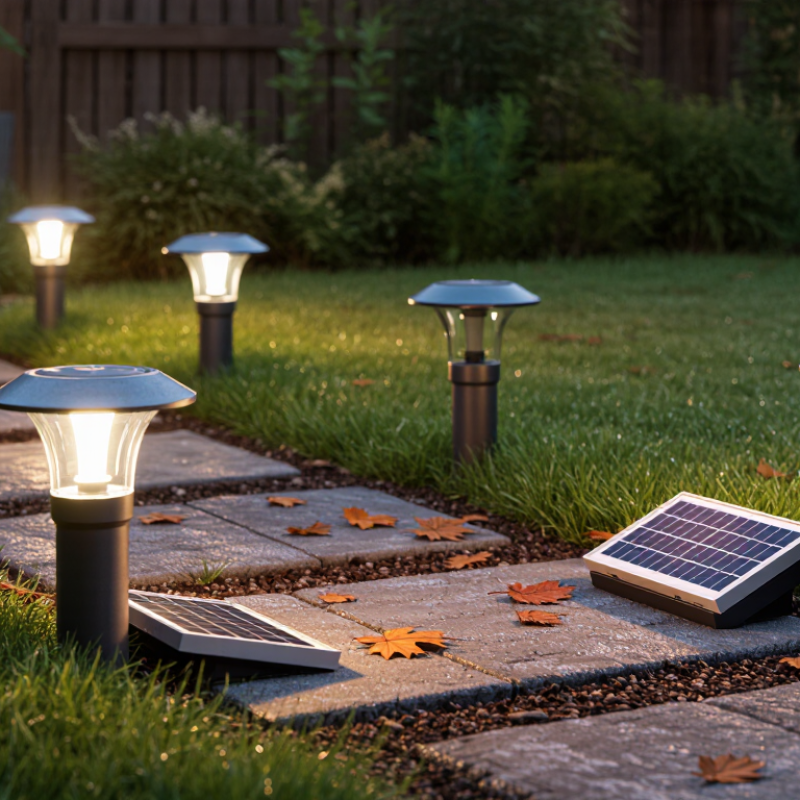
How Solar Pathway Lights Generate and Store Energy
At dusk, a pathway light runs on energy collected earlier. Its small photovoltaic panel absorbs daylight and converts it into direct-current electricity. A charge controller regulates the flow, while a rechargeable battery stores the surplus for evening use. A light sensor then switches on the LED when the surroundings grow dark.
The energy balance is simple, but not always generous. Shade from a fence, dust on the panel, or a short winter day can reduce charging time. A partly charged battery may power the light for only a few hours. That’s the weak link. The U.S. National Renewable Energy Laboratory’s review of photovoltaic degradation rates reported a median annual decline of about 0.5% for studied PV modules. Those results do not directly predict tiny pathway panels, but they show why aging can gradually reduce energy harvest.
Battery condition matters too. Repeated charge cycles and heat can reduce usable storage, even when the panel still looks clean. The IEA Photovoltaic Power Systems Programme reported roughly 1.6 terawatts of installed solar capacity worldwide by the end of 2023. That scale reflects the same basic conversion process, though garden lights use far smaller panels and batteries. In practice, a clean panel and a battery matched to the light’s nightly demand matter more than a bright-looking casing. I’d still check the battery before blaming the panel; it is an easy detail to miss.
| Component or factor | Typical characteristics | How it works | Why the light may get dim |
|---|---|---|---|
| Solar panel | Small pathway-light panels commonly produce power in the fractions-of-a-watt to low-watt range. Output varies with panel area, cell type, sunlight, and angle. | Photovoltaic cells convert sunlight into electrical energy, which a charging circuit directs to the battery. | Dust, leaves, snow, shade, poor orientation, or a damaged panel reduce the energy collected during the day. |
| Battery storage | Common designs use rechargeable batteries, such as NiMH or lithium-based cells. Capacity and voltage differ by model. | The battery stores energy collected in daylight and supplies it to the LED after the light sensor detects darkness. | Age, repeated charge cycles, cold temperatures, or incomplete daytime charging can reduce usable capacity and brightness. |
| Charge controller and light sensor | A small electronic circuit manages charging and switches the light on when ambient light falls. | The controller helps prevent unsuitable charging and may regulate LED current or operating modes. | A faulty connection, sensor obstruction, or circuit problem may affect charging, switching, or LED output. |
| LED and operating time | LEDs use stored electricity to produce light. Actual brightness and nightly runtime depend on the LED, battery, and control circuit. | After sunset, stored energy powers the LED; some designs reduce output as the battery charge falls. | A light that starts bright but fades early may have insufficient stored energy, a worn battery, or a high energy demand. |
| Weather and season | Cloud cover, shorter winter days, and low sun angles can reduce daily solar charging. Actual conditions vary by location. | Less sunlight means less electrical energy is generated and available for nighttime use. | Several low-sunlight days in a row can shorten runtime or cause weaker output, even when the light is functioning normally. |
| Practical checks | Check the panel, surrounding shade, battery condition, and any accessible wiring or contacts. | Cleaning the panel and placing it in a sunnier location can improve the amount of energy collected. | If dimness continues after several sunny days, consult the product instructions and replace the rechargeable battery only with a compatible type. |
Typical characteristics are general guidance, not guaranteed specifications; designs and performance vary by product and operating conditions.
A small panel converts daylight into electricity. A controller sends surplus energy to a rechargeable battery for nighttime use.
A light sensor detects darkness and activates the LED. The stored battery energy powers it.
Dust, shade, a tired battery, or moisture can reduce brightness. A dim light does not always mean the LED has failed.
Wipe it gently with a damp, soft cloth. Clear away leaves and nearby plants that cast shade.
Try about six hours of direct sunlight, then check the light after sunset. Cloudy weather can make the result less useful.
Check the battery compartment for corrosion, moisture, or loose springs. A normal-looking voltage may still hide weak battery capacity.
Check its printed chemistry, size, and voltage first. Use a matching cell, and do not mix old and new batteries.
Yes. Cover the panel to test whether the light turns on. A faulty sensor may leave it in daytime mode.
Clean it monthly during dusty or pollen-heavy seasons. Small details matter. I might check the battery too, before blaming the panel.
Solar pathway lights use small panels to convert sunlight into electricity, which is stored in rechargeable batteries and used to power the lights after dark. When people ask, “why are solar pathway lights getting dim,” the cause is often limited sunlight, dirty or shaded panels, aging batteries, loose connections, or worn-out light components. Cold weather and shorter daylight hours can also reduce charging time and brightness.
To diagnose a dim light, clean the panel, check for shade, inspect the battery and connections, and compare its performance after a full day of direct sunlight. Restore brightness by repositioning the fixture, cleaning the panel, replacing a weak battery with a compatible one, or addressing damaged parts. Regularly removing dirt and debris, keeping panels unobstructed, and checking the lights seasonally can help maintain reliable illumination for longer.

